Working with unspun yarn, Part 2
If you've worked through Part 1, you know what unspun yarn is and why it earns a place on your needles. This part is the hands-on companion: the practical habits that turn unspun yarn from intimidating to enjoyable.
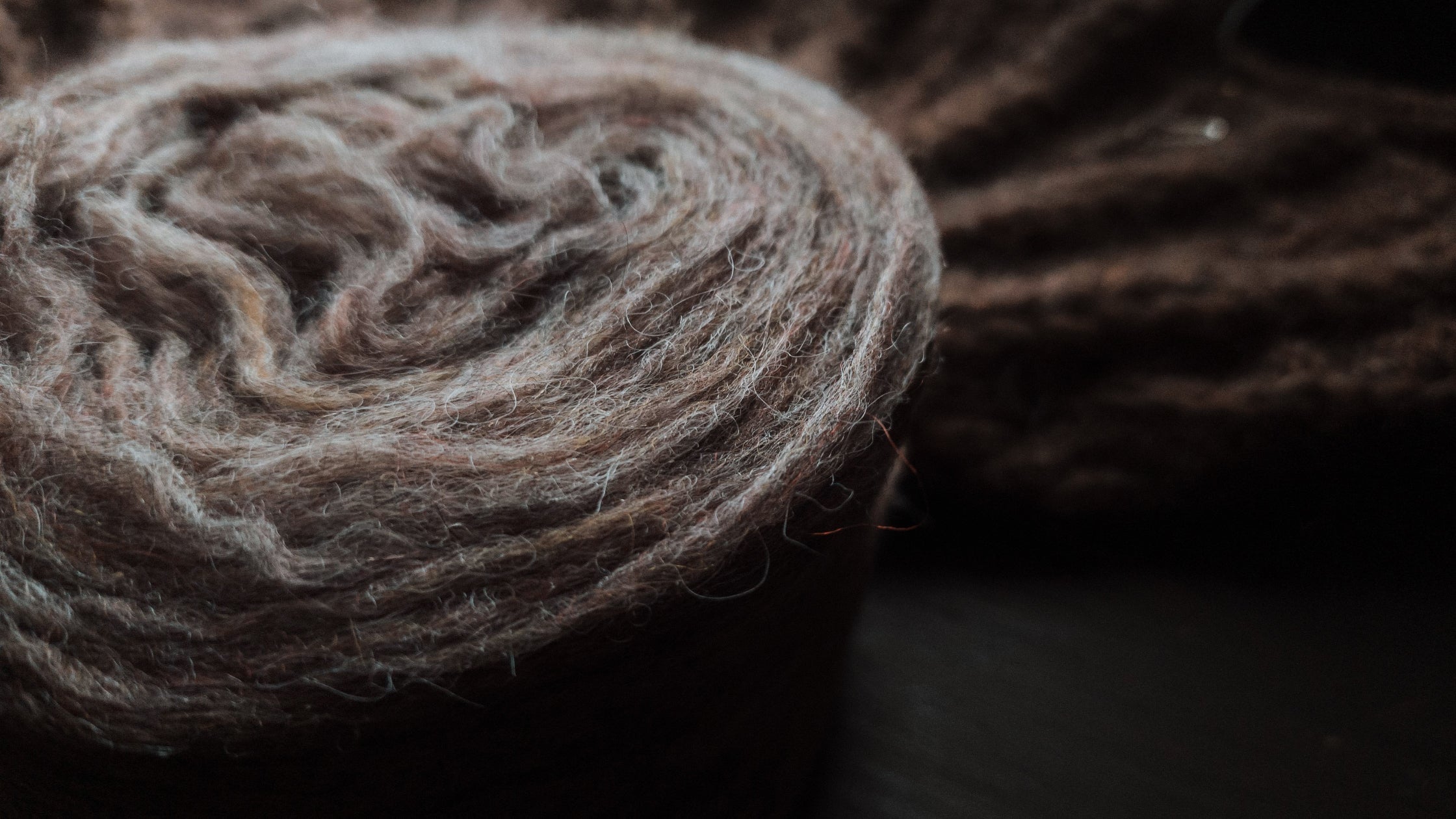
As a quick recap: unspun yarn is, as the name suggests, unspun. It's often called pre-yarn or wool roving. The wool is cleaned and carded – which aligns the fibres in preparation for spinning – but the process stops there. The fibres are left twist-free, ready to be knit with directly. It's softer, loftier, and lighter than spun yarn, and it has a learning curve worth meeting.
Take it slow. Decelerate.
Wind your yarn first.
The small ritual that makes everything else easier
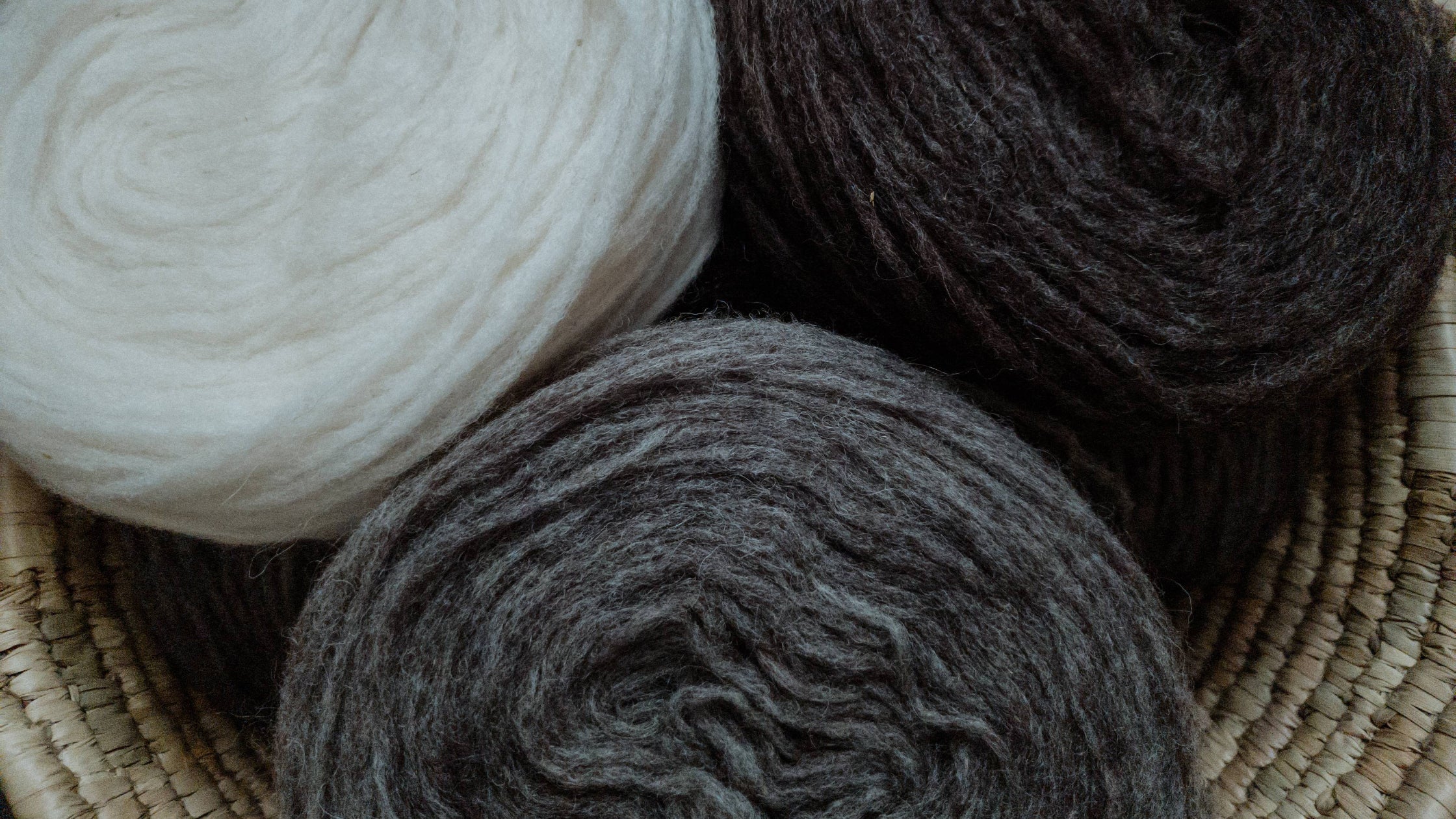
Unspun yarn typically comes in plates or wheels. Before casting on, wind it from the plate into a ball. This is especially critical if you plan to knit with multiple strands at once – two unspun, or one unspun held with mohair – or if you're working stranded colourwork.
Take two plates of yarn and locate the ends on the outer side of each plate. Combine them and wind a ball as usual, making sure it fits comfortably in your hand. Wind loosely to prevent strain that could cause the yarn to break mid-project. The goal is a ball that's easy to work with and unwinds seamlessly as you knit.
Tempting as it is to skip this step, working with a ball is more manageable than knitting straight from the plate. Balls are more portable, and they make working with multiple colours simpler than juggling several plates. You'll eventually develop your own preference – but for a first project, trying to work directly from a plate is needlessly frustrating.
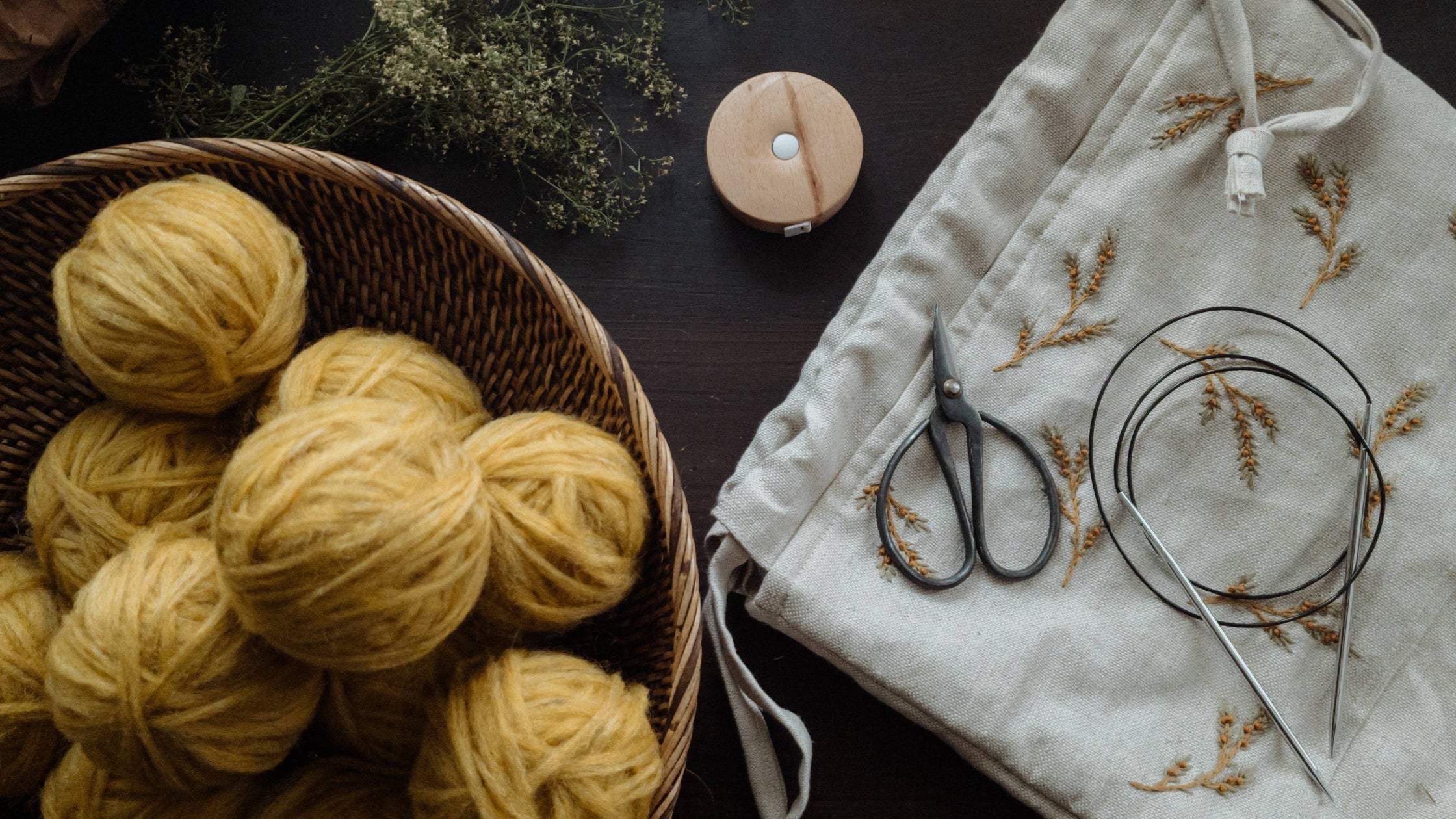
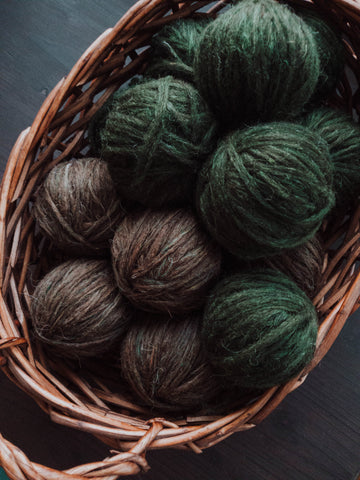
I do this every single time. Over the years it's become a small cast-on ritual, originally inspired by Caroline – the owner of Höner och Eir – and her own ritual for Nutiden. I take my favourite project basket, sit down, and wind up these compact balls. Don't see it as a chore – there's something profoundly satisfying and mindful about hand-winding yarn.
Cast on – with help.
The trickiest moment in the whole project
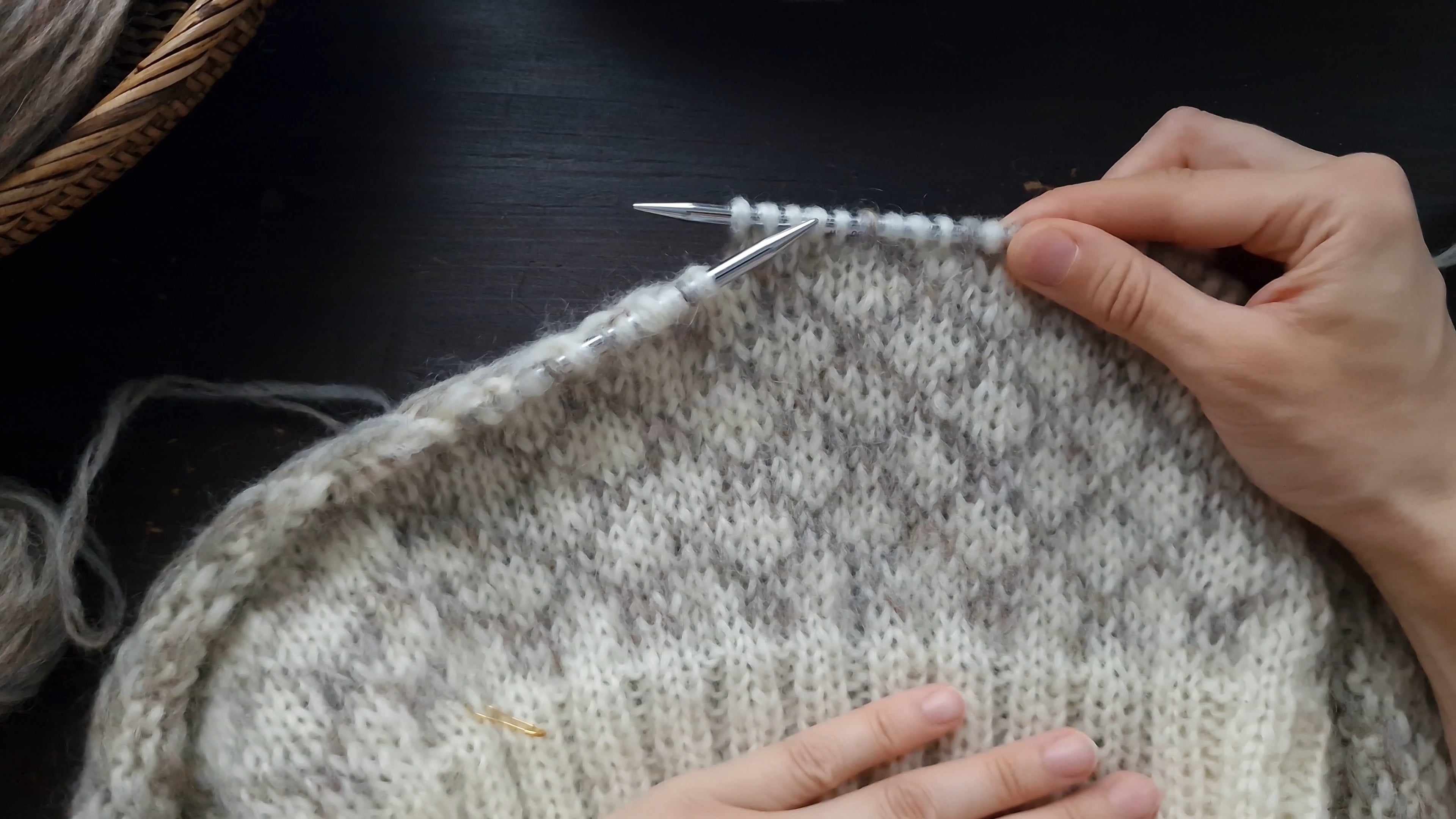
Casting on and off with unspun yarn can be challenging, particularly for those new to it. The simplest fix: hold a single strand of silk mohair or comparable lace-weight yarn along with the unspun while you cast on. The mohair adds structure and stops the unspun from drifting apart at exactly the moment when tension matters most.
"Silk mohair: a helper at cast-on, a nemesis at unravel."
The friend with a complicated reputation
If holding an additional strand isn't practical – say your pattern explicitly calls for pure unspun – you can still get excellent results by being extra cautious, working in small sections, and felting the yarn as you go. It needs a bit more patience, but it works just as well. This is especially useful if the pattern calls for a more sophisticated cast-on like the Italian Tubular or a sewn bind-off.
For a first project, I'd suggest starting with a straightforward long-tail cast-on or a similar variation. The German Twisted Cast-On – also known as the Old Norwegian – is a stretchier alternative and a personal favourite. Don't be discouraged if cast-on feels difficult; it gets easier with practice, and once you've done it, the hardest part is behind you until bind-off.
Knit gently.
Slow hands, intact yarn
If you're new to unspun yarn, treat it with extra care while knitting. Take your time and avoid pulling the yarn forcefully – tugs and yanks are the most common cause of mid-project breakage. This is also why I recommend winding balls; when knitting from a plate, you'll need to be slower still, because the weight of the plate plus a strong tug is more than the unspun strand can take.
Repair breaks with warmth.
The felting trick that saves projects
Despite your best efforts, breakage might still happen. Don't worry – this is a normal part of working with unspun yarn, and it's easily fixable.
"Overlap the two ends. Rub them together with a little warm water. The fibres do the rest."
The repair, in one breath
The heat and friction encourage the fibres to felt together, creating a strong bond. Once felted, the join is barely visible on the right side of the fabric, and it holds as well as the rest of the strand. With practice, the whole repair takes under thirty seconds.
Unravel with caution.
Sometimes the fix isn't undoing
Mistakes happen. They're a natural part of hand-knitting, and there will be times you need to rip back a few rows – or even the whole project. When you're working double-stranded with pure unspun in simple stitch patterns or colourwork, this is usually fine. As long as you take it slow and handle the yarn gently, you can salvage most of it.
Trouble starts when the yarn gets tangled in more complex stitch patterns, or when it was held together with a stronger yarn like silk mohair. Silk mohair is a brilliant ally during cast-on, but it can be a nemesis when unravelling: the spun mohair, being stronger, can cut the unspun as you pull back, leaving you with a strand of mohair interspersed with fluffy, broken bits of wool.
Prevent before you repair.
Notice the thinning, act early
The thickness of a single unspun strand can vary within a plate. Some sections are thinner than others – and thinning can also happen mid-project, simply from the weight of the ball or strain pulling the fibres apart. If you notice the stitches getting more see-through and thin, it's better to be proactive.
Let the yarn break on purpose. Unravel the last few thinning stitches, then overlap the strands again and reinforce them as you continue knitting. Far better to do this in advance than to repair the finished garment later.

By following these few simple habits, you can reduce breakage dramatically and keep the knitting experience pleasurable and stress-free. Despite its fragility, unspun yarn is an extraordinary material to work with – for its versatility, its unique texture, and its ability to create cosy, lightweight garments.
Care for the long life of the piece.
How handknit unspun gets better with age
Garments knit from unspun yarn can last for years when properly cared for. Pilling may occur, especially in the first few wears – a razor or wool comb takes care of it. Your sweater will subtly change shape over time too, conforming to your body, gaining drape, and softening considerably. With this natural evolution, there may come a time when it becomes a dedicated cosy piece for home, or no longer fit for outdoor wear.
That's when you get creative. Consider felting it in the washing machine and transforming it into a pillowcase, or giving it to your dog as cosy bedding for the colder months. For dogs without a double coat, wool insulates and regulates body temperature the same way it does for us – my huskies have laid claim to several of my "unloved" wool sweaters over the years.
"The more you wear it, the softer it becomes."
Unspun's whole promise
On the first wash, the wool will begin to soften, and the process continues with every subsequent wash and wear. Many unspun yarns – like Nutiden from Höner och Eir and Manchelopi from Wooldreamers – are quite soft and lofty to begin with. Others, like Plötulopi, are scratchier when new. Don't be quick to relegate a Plötulopi sweater to the back of the cupboard – the more you wear it, the softer it gets.
I can vouch for the durability from personal experience. My mossy green Loki Raglan, knit in Plötulopi, quickly became a reliable companion for chilly-weather hikes. Despite extensive wear, it's still holding up – softened, with beautiful drape, and unmistakably broken in.
And given wool's natural antibacterial and odour-resistant properties, frequent washing isn't necessary. A simple hang outside to freshen up usually does the job.

One last thing: savour it.
Unspun is an invitation to slow down.
Working with unspun yarn asks for a bit more attention and mindfulness. The unmatched warmth, texture, and quiet aesthetics it offers make the effort entirely worthwhile.
If you're new to unspun, handle it gently and take things slow. I promise – once you get the hang of it, it won't feel significantly different from spun yarn, and it won't slow your knitting in any meaningful way.
Cherish this initial experience. Take the chance to truly savour the knitting process from start to finish. We often race through projects so quickly that they're over before we realise. Unspun gives you an opportunity to slow down. So slow down.
Ready to cast on? Head over to Part 3: Pattern Recommendations for projects perfectly suited to your first unspun yarn knit.