The spring & summer fibre guide for knitters
As the days have progressively become warmer, my thoughts have turned toward warm-weather knits. There's a fresh design on my needles – the top-down counterpart to the Chloe Sweater, the Chloe Tee, in Saona by Wooldreamers – and plans to revisit last year's Wayfarer Tee in new fibres. Which means I have been deep in the question of which yarns to reach for, and when.
Match the yarn to your climate,
not the calendar.
Warm weather doesn't mean putting the needles away – no weather keeps a knitter away from knitting. Some of us continue with heavy woollen sweaters straight through July (pausing only for the worst heatwaves). But the warmer months are also a chance to explore fibres beyond traditional winter wool. So here's the short version of which fibre fits when, the yarns I actually use, and a few opinions you can take or leave.
Why include spring? Because for those of us in the south of Germany, mid- and even early-spring already signal a shift to lighter garments.
Cotton.
The cool classic
When I say t-shirt, you likely think cotton. A nice selection of high-quality cotton or organic cotton tees is a must in anyone's wardrobe – durable, reliable, soft, breathable, with decent moisture control and beautiful stitch definition. Versatile, affordable, vegan.
It does have caveats. Cotton lacks elasticity, so it doesn't bounce back like wool after stretching. It will stretch in blocking, and again with wear – plan for some growth. Adding elastic to neck ribbing helps retain shape. Cotton is slippery to knit, but takes vibrant dye beautifully.
"Nothing stays damp as long as cotton. It's heat-friendly and rain-disastrous."
The single biggest caveat
If you can, look for long-staple cotton – Supima or Pima – for unmatched softness, superior strength, exceptional drape, and less pilling. Mercerized cotton has been chemically treated for a more lustrous finish and more vivid colours, but at the cost of the slightly softer hand of unmercerized varieties.
Organic cotton offers the same comfort and durability as conventional cotton, grown without toxic pesticides or synthetic fertilizers – better for cotton producers, communities, and biodiversity.
I'll be honest: I've never knit with pure cotton because I reach for blends from the start. So let's talk about blends.
Cotton-Merino.
The obvious blend – and my favourite
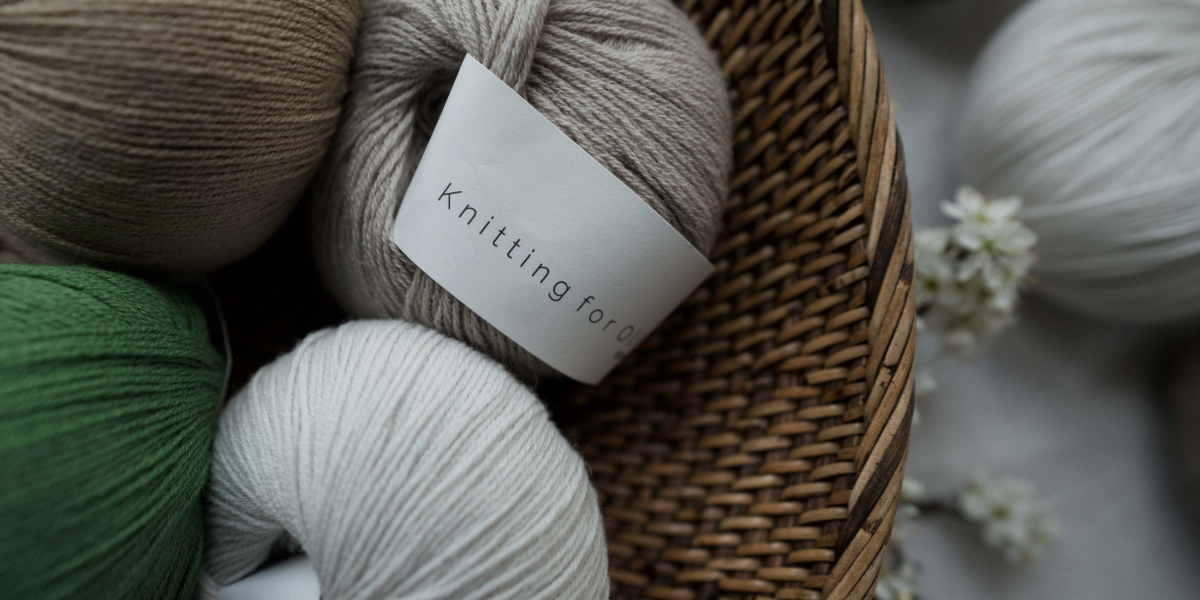
This is my favourite combination for summer knitting, and two of my favourite yarns live here: Saona from Wooldreamers (everyone's darling since 2023), and Knitting for Olive Cotton Merino – the summer staple.
The point of combining cotton and wool is that you get the best of both. Strength and durability from cotton, softness and drape from wool. Breathable like cotton, temperature-regulating like wool. Cotton wicks moisture; wool wicks better, and still feels fine when slightly damp where cotton just feels damp and refuses to dry. Wool adds elasticity and shape retention; pure cotton stretches out over time. Plant fibres reduce wool's tendency to pill.
"Saona is squishy and bouncy in a way I lack a better word for."
If you've worked Wooldreamers, you know
Saona is 50% cotton and 50% local Spanish wool – a mix of Manchega and Merino. The blend gives it that signature Wooldreamers character: less slippery than KFO's, easier on metal needles, rustic but soft. There's just enough drape for a boxy tee in stockinette, but not enough to ruin a lace pattern. It's the original yarn for the Summerwood Tee.
KFO Cotton Merino is 70% organic cotton and 30% RWS-certified merino. Higher cotton content means it's slipperier – wooden needles, please – but it rewards you with gorgeous drape, sharp stitch definition, and a colour range that's frankly hard to choose from. If you want your summer top to look store-bought (in the best way), this.
Other cotton-merino blends worth knowing: BC Garn Bio Balance, CaMaRose Økologisk Sommeruld, and Sandnes Duo.
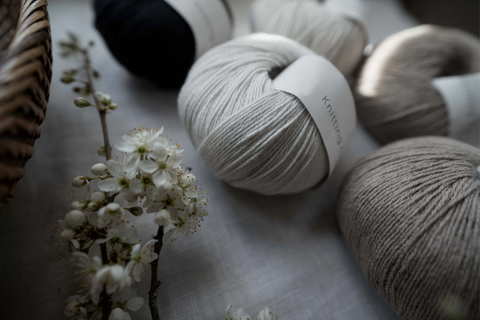
Cotton-Silk.
The sleek one
Silk in a cotton blend creates something more luxurious – same soft comfort, with a touch of elegance and an elegant sheen. If wool isn't for you, silk still adds temperature-regulating properties and a cool feel against the skin. Silk's tensile strength is high but it's more prone to abrasion and sun damage than cotton; the blend balances these into a fabric that combines silk's strength with cotton's everyday durability.
Pure cotton-silk blends are uncommon – you'll more often find cotton-silk-wool or cotton-silk-alpaca. Two worth looking at: Lana Grossa Landlust Sommerseide (50/50) and Rico Luxury Organic Cotton Silk.
Cotton-Linen.
The quintessential summer fabric
If anything screams summer, this. Both fibres are highly breathable – air circulates freely, keeping you cool and dry. Cotton absorbs moisture; linen wicks it. Together, they keep the wearer comfortable. Linen softens with every wash, and when combined with cotton's naturally soft fibres, the resulting fabric only improves with age.
Both are natural, biodegradable, and earthy in look. Linen is stronger and more durable than cotton on its own, and made from flax – requiring less water and fewer pesticides than cotton. Blending the two reduces the environmental footprint of the resulting fabric.
"What you knit in May is a better thing by August."
Linen's whole proposition
Pure 50/50 cotton-linen is rare; BC Garn Allino is the obvious pick. Alternatives lean heavier on cotton or add lyocell: Isager Bomulin (cotton-heavy), Isager Trio 2 (with lyocell, the eco-friendly form of rayon – same family as Tencel).
One opinion: if you live in hot, humid weather, lean toward pure linen. Cotton holds onto moisture and feels damp; linen releases it.
Silk.
My summer favourite
Pure 100% silk feels more lustrous, smoother, and softer than cotton – and the sheen and drape that get muted in blends come into their own. A protein fibre with no halo, no scales. Cool against the skin in heat; warmer than you'd expect when temperatures dip. Absorbs up to 30% of its weight in moisture before feeling damp, regulating temperature, breathing well.
Slippery on the needle – wooden needles, always. Strong on the spool. UV-sensitive, so it weakens with prolonged sun exposure (it's a protein fibre, same as wool). More expensive than cotton or blends. The drape is the reward; the slippery cast-on is the price.
"Silk feels cool against the skin. Even in July."
The reason it belongs in a summer guide
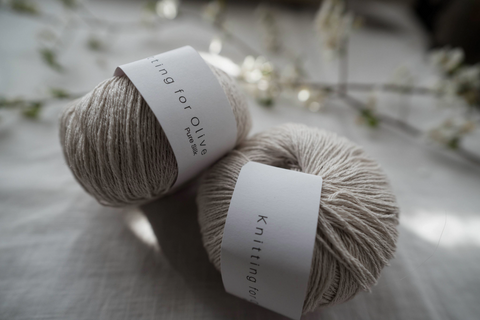
My go-to is Knitting for Olive Pure Silk. It's what I'm reaching for all summer 2026, and it's the fibre behind the Slipstream Tank dropping mid-June.
Linen.
The long game
Linen has a uniquely rustic texture that feels much rougher on the needle than cotton or any other fibre. But it softens considerably with time – and only improves with wear. You may have heard that linen clothing gets better with age; that's not a marketing line.
Highly breathable and temperature-regulating, linen keeps you cool in summer and (surprisingly) warm in winter. Absorbs up to 20% of its weight in moisture, and unlike cotton, it doesn't hold onto the damp – it releases it back to the air. The best fibre for hot, humid climates. Excellent strength and durability. Wrinkles, yes; but linen's whole proposition is character.
One opinion: avoid cheap linen. The knitting experience and the finished fabric are noticeably rougher and less attractive. Save that for grocery bags, not summer tees.
My favourite is Isager Hør Organic. BC Garn Lino and CaMaRose Løvetand are lovely alternatives.
Linen and Alpaca.
A match made in heaven
Cotton-linen is the obvious summer marvel – but something quietly more special happens when you combine 100% linen with lace-weight alpaca held together. The initially rough, stiff linen softens immediately and becomes truly enjoyable to work with. The resulting fabric is rustic in feel yet possesses the soft, fuzzy halo of alpaca.
Both fibres regulate temperature; both are moisture-absorbent; both complement each other. The created fabric has a unique tactile feel that loves textured stitch patterns – like the ones in my Bjørk Top.
"Alpaca has no lanolin. The answer if you can't wear wool."
For wool-sensitive knitters
The pairing: Isager Hør Organic held together with Isager Alpaca 1.

Wool.
The unlikely summer hero
Contrary to popular belief, wool can be a star in summer knitting – thanks to its unique properties. Lightweight wool, that is. Fingering to sport or light DK. Not your favourite heavy worsted sweater.
Wool regulates temperature: cool when it's hot, warm when it's cool. It wicks up to 30% of its weight in moisture and remains comfortable even when slightly damp. Merino in particular is soft, breathable, and lovely against the skin.
"Yes, you can still knit with wool in summer."
For cool evenings and air-conditioned rooms
That said: handknit merino is still heavier than the store-bought lightweight merino tops you might live in during a hot, humid summer. Reserve handknit merino for cool summer evenings, garden mornings, and over-air-conditioned offices.
My go-to: Knitting for Olive Merino. Alternatives: Sandnes Tynn Merinoull, Sandnes Sunday by PetiteKnit, Pascuali Merino Baby, Rosy Green Wool Cheeky Merino Joy.
So how do you choose?
Climate, not calendar.
Yarn choice isn't only about the material itself – it's about how each one aligns with your project, the climate you live in, and what you want from the garment. The breathability of linen, the soft insulating properties of wool, the unique blend of cotton and silk. Find the match. If you don't believe me, knit a Wayfarer Tee in cotton merino, then knit it again in pure linen and see.